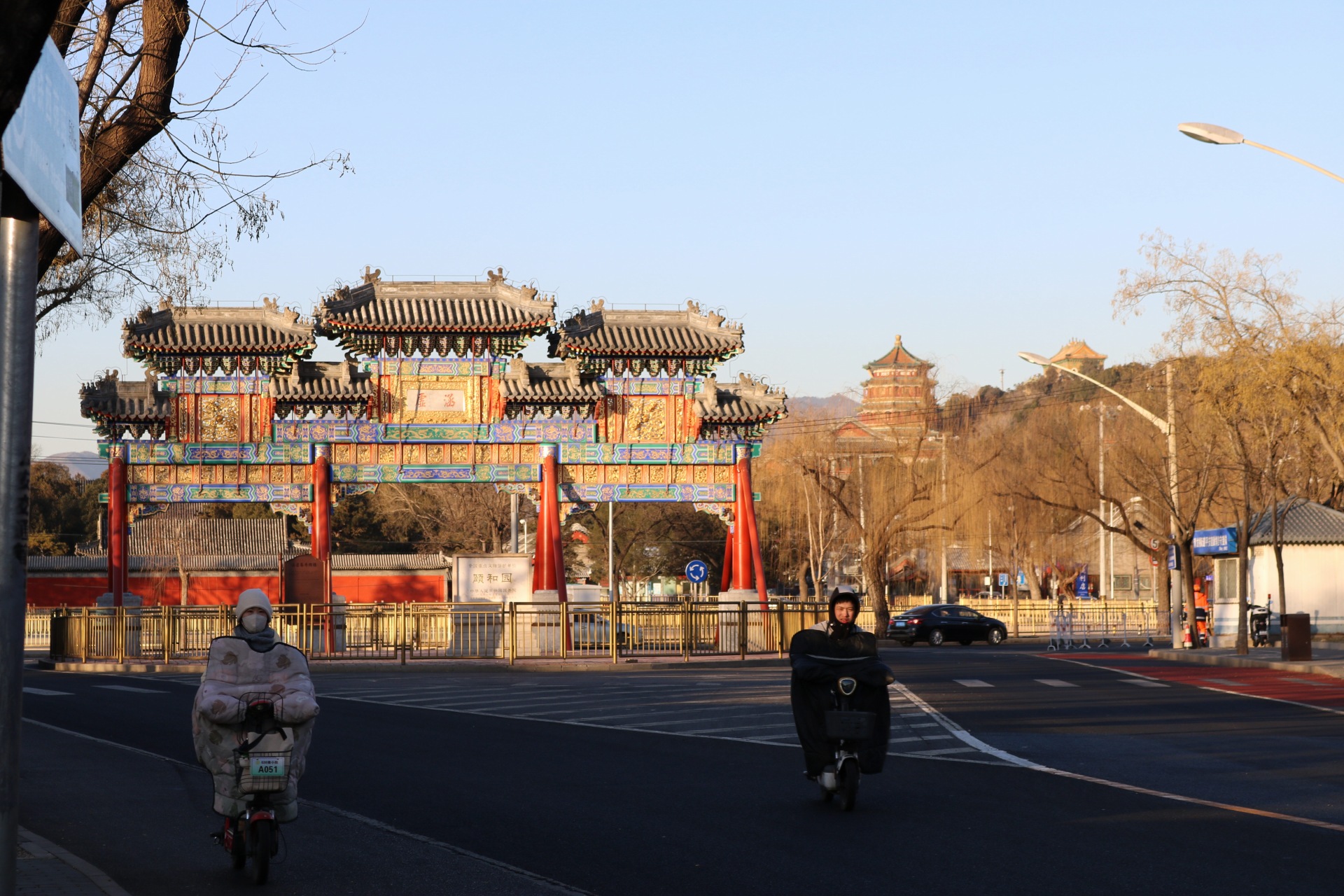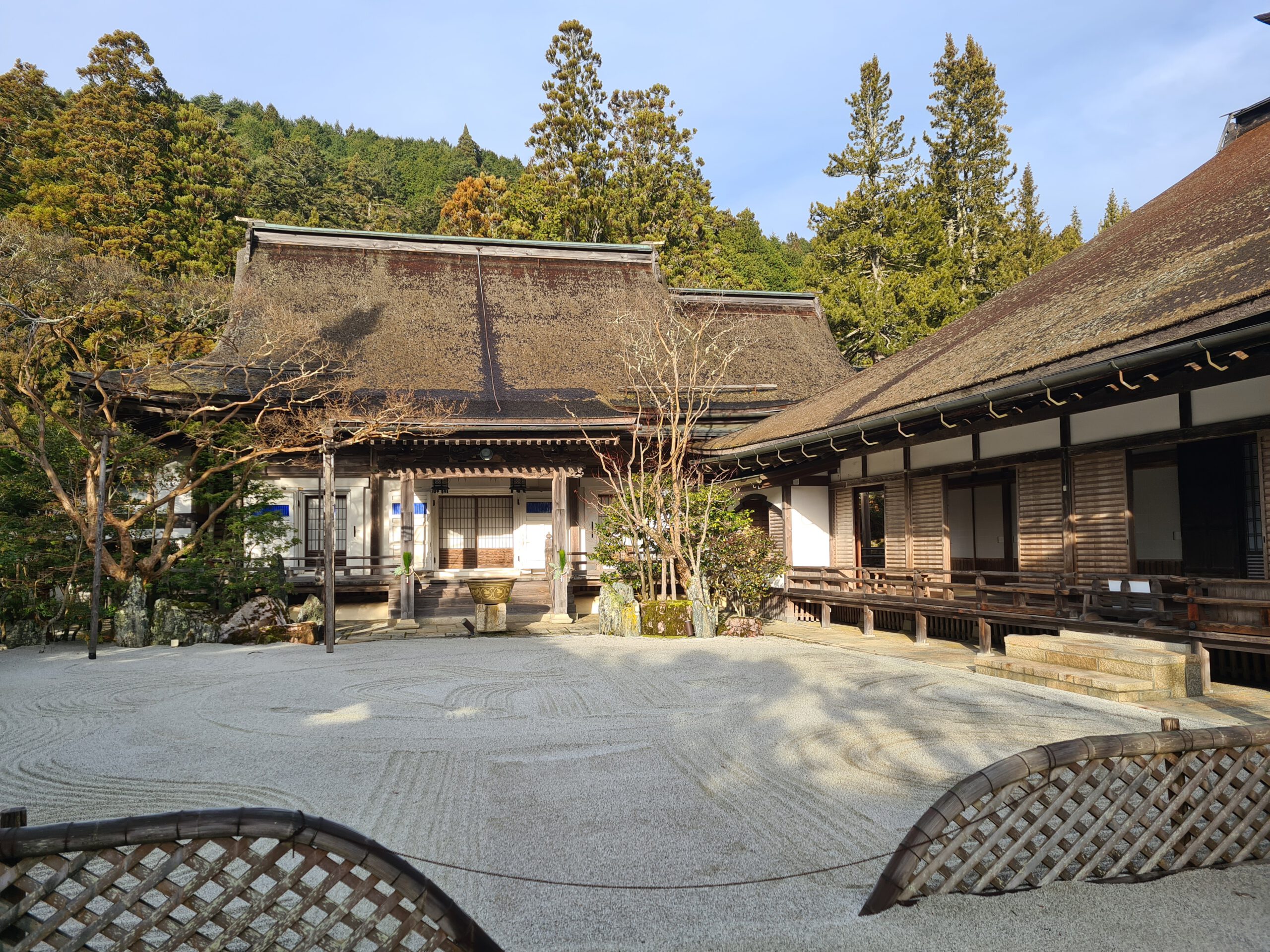
We spent one night at Rengejo-in Temple, where the experience was not just about accommodation, but about slowing down, joining the rhythm of temple life, and ending the year in a way that felt peaceful and very different from the usual city countdown.
Arriving at the temple
After the long journey from Osaka, we reached Koyasan by train, cable car, and bus, then walked to the Rengejo-in temple with our luggage. For a detailed explanation on the route and our experience, read our other post: 2 Days in Koyasan: Quiet Temples, Cemeteries and a Shukubo temple stay. We arrived at the temple before check-in time, so we left our bags on the patio and went out to explore the town, already looking forward to coming back later and properly settling in.
Our room
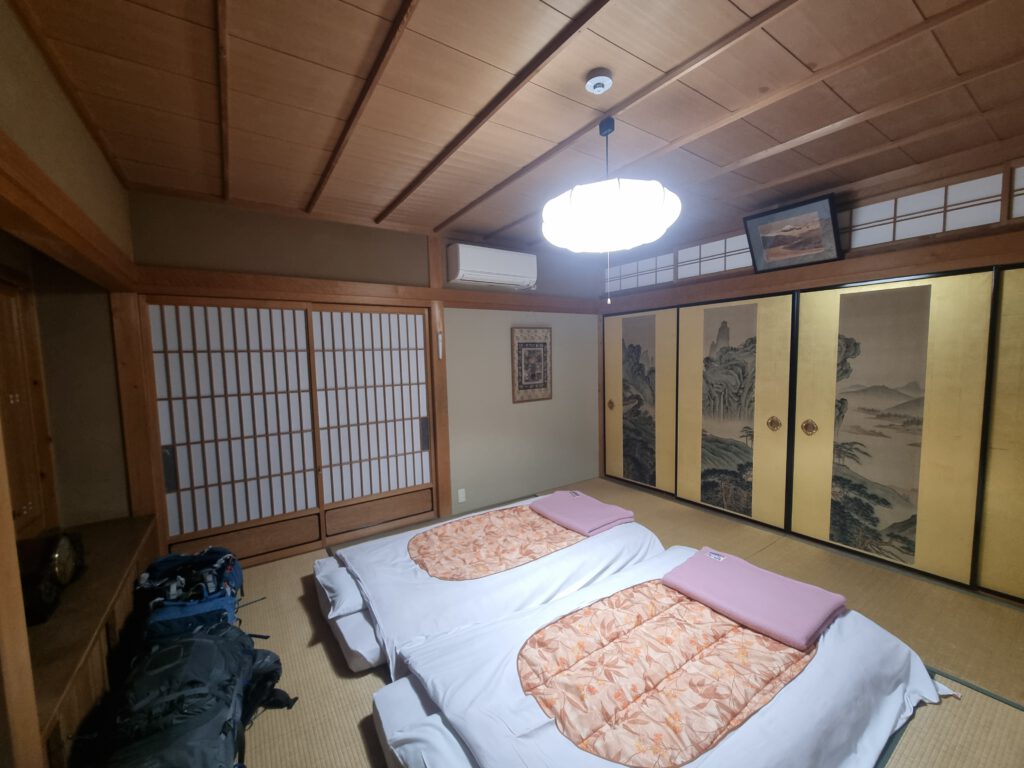
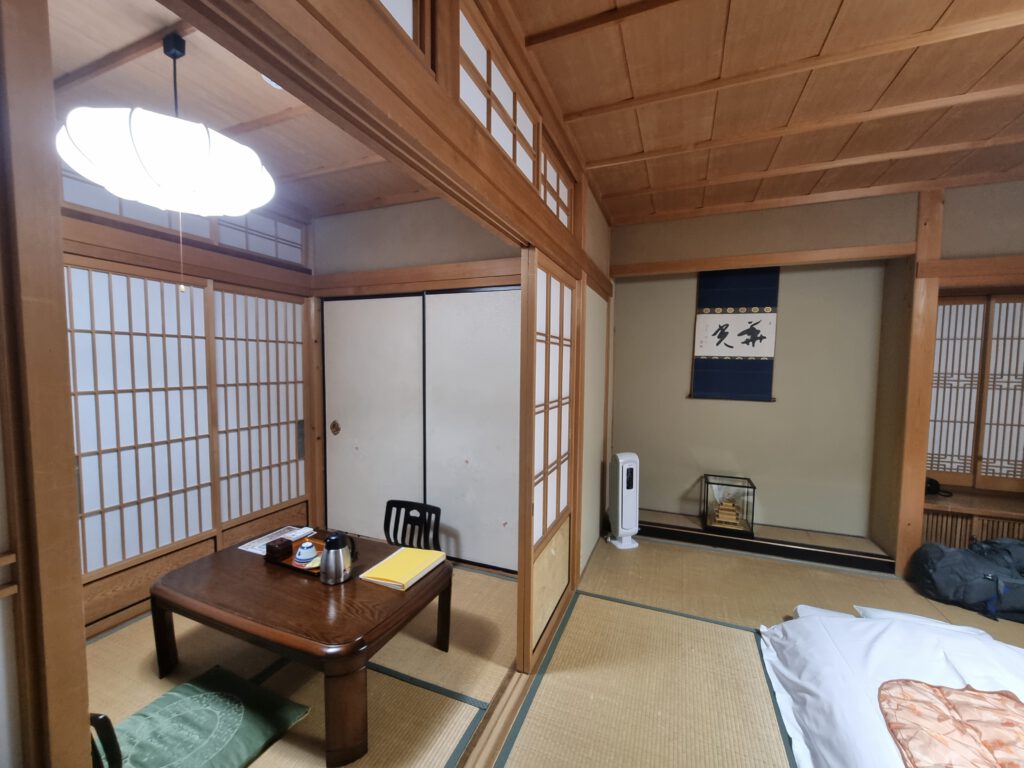
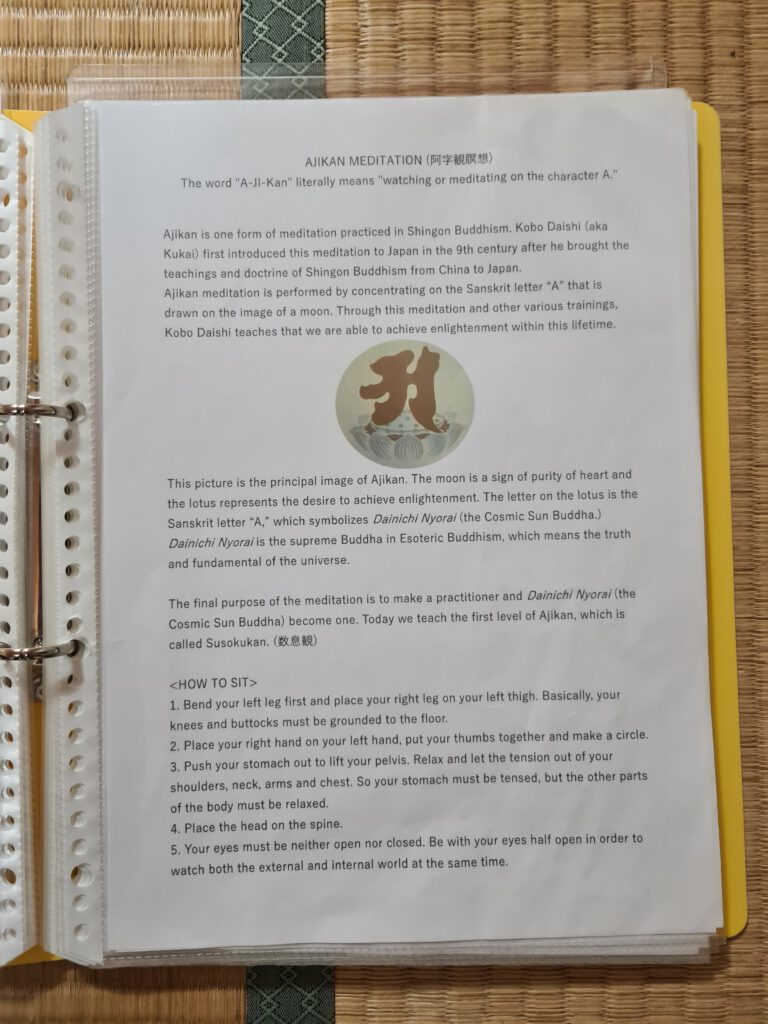
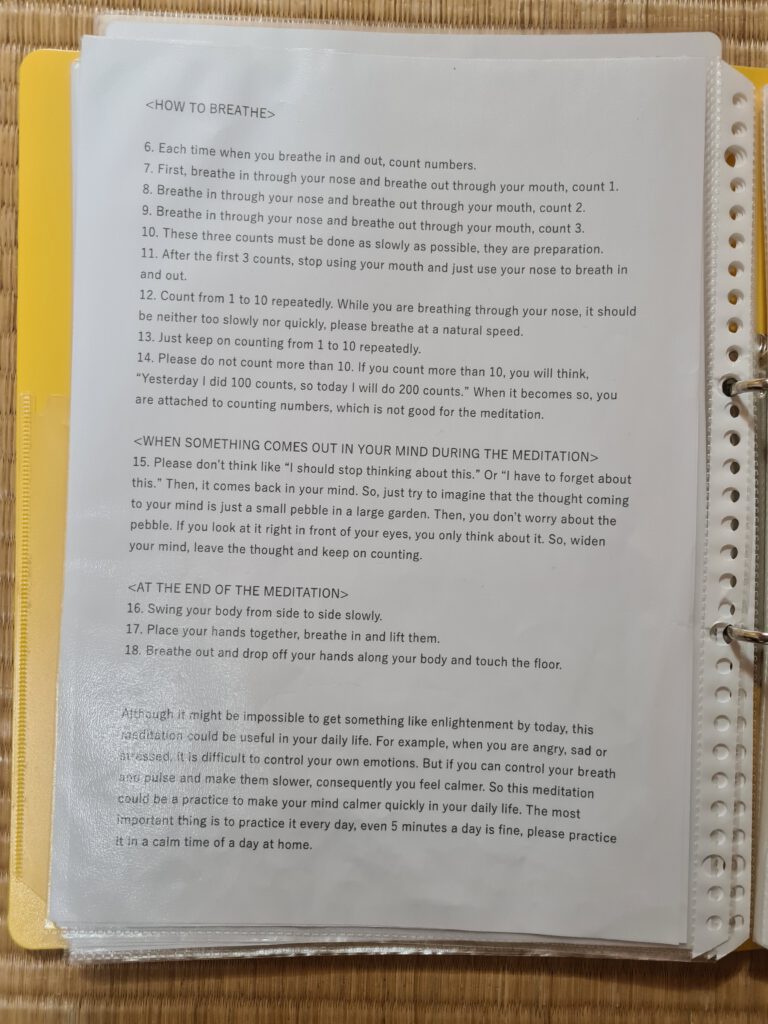
Ajikan Meditation
At 17:00, we joined the meditation session. One of the monks started with a short explanation and some prayers, and then the room became completely silent for around half an hour. It was a simple experience, but that was exactly what made it memorable. After a trip filled with busy stations, packed streets, and constant movement, sitting still in silence felt surprisingly grounding.
Shojin-Ryori dinner
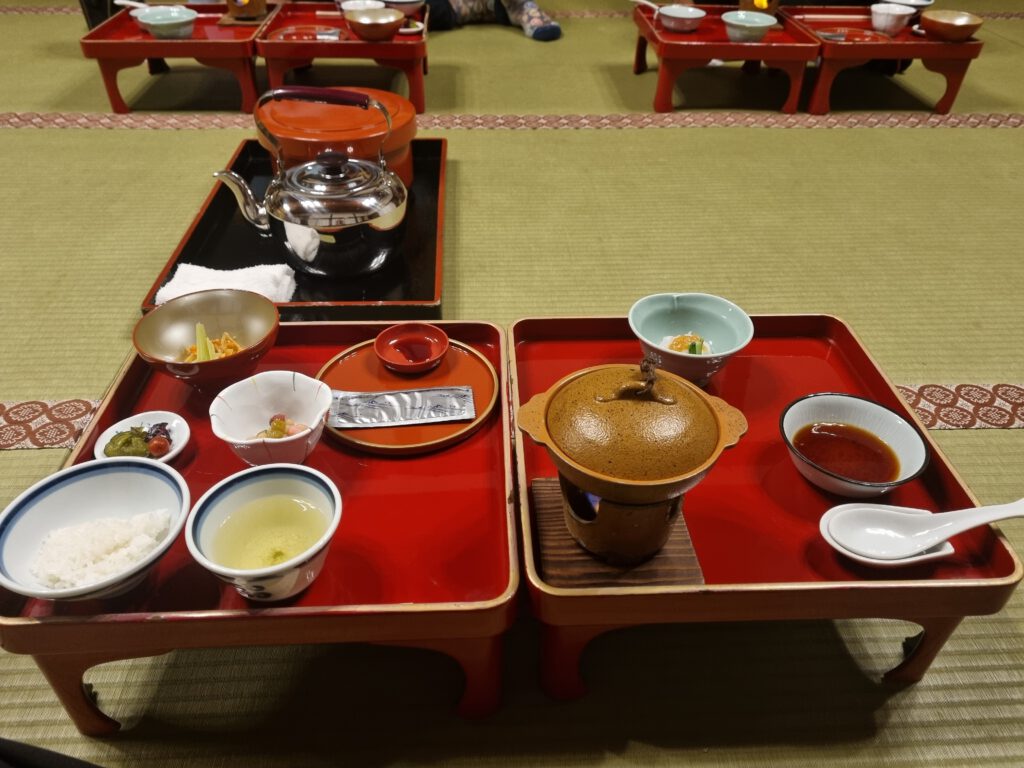
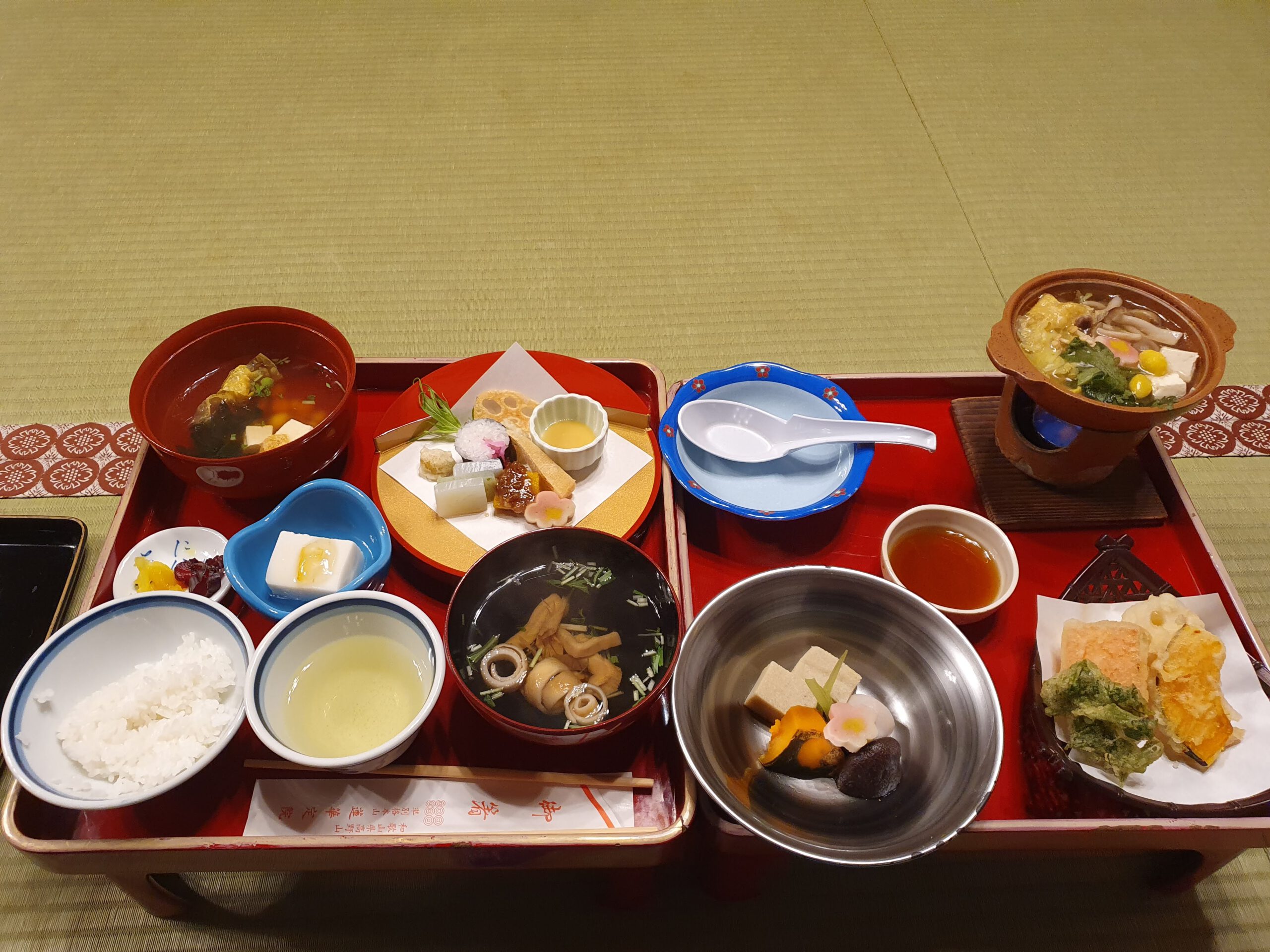
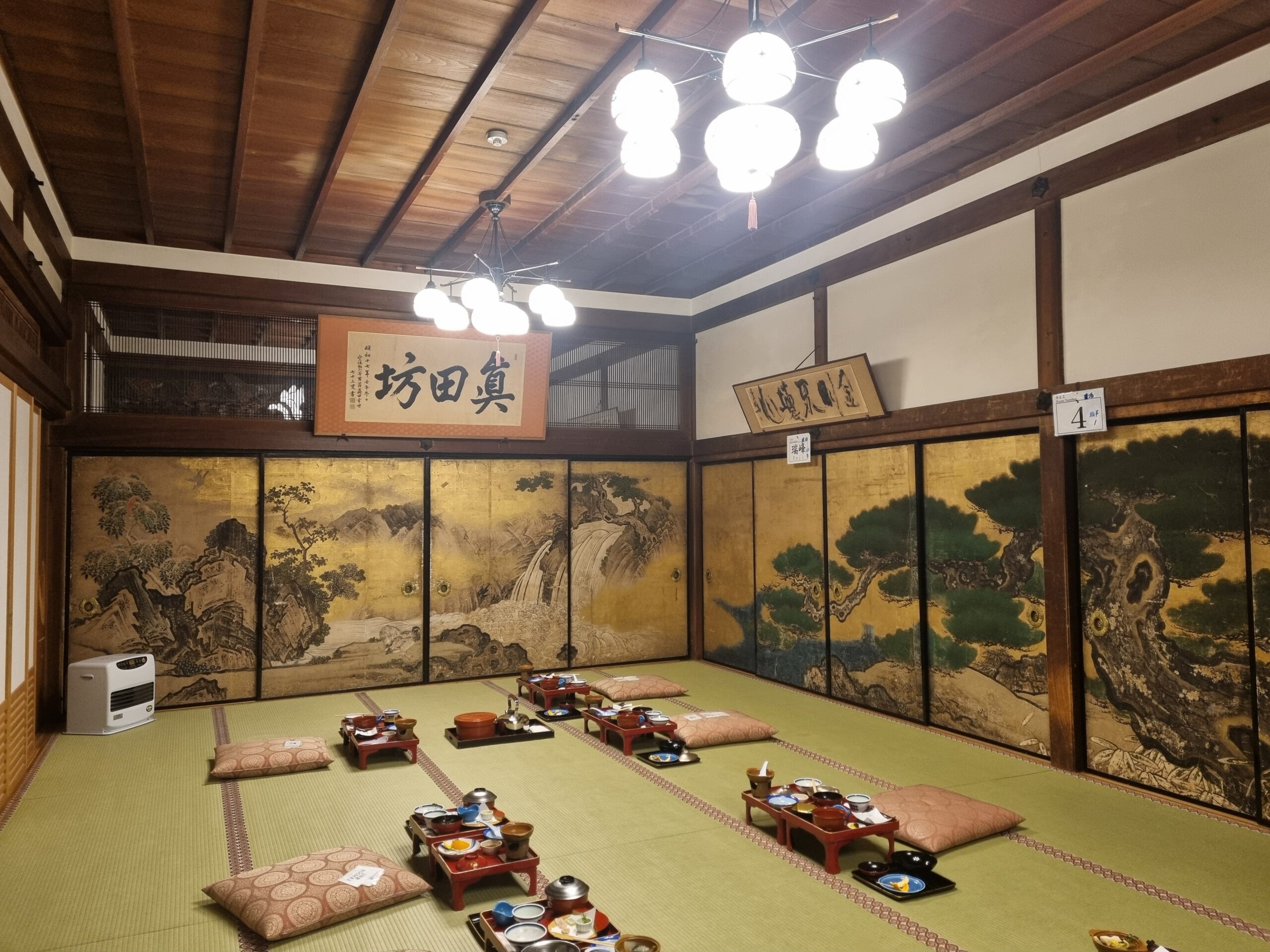
Right after meditation, communal dinner was served in the main hall. We were given two trays filled with traditional Buddhist vegetarian food, carefully arranged and very different from the meals we had been eating elsewhere in Japan.
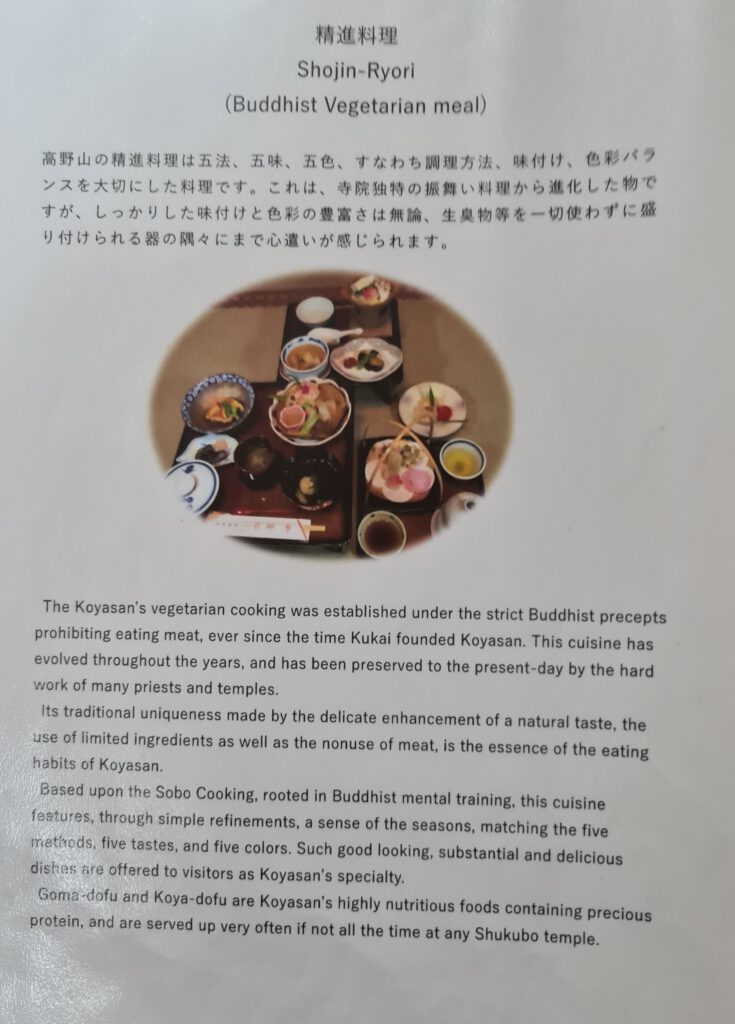
At Rengejo-in, this cuisine is part of a long temple tradition. The monks explained that shojin-ryori uses seasonal ingredients and avoids not only meat and fish, but also pungent ingredients such as garlic, onions, leeks, chives, and spring onions. Historically, it is not only everyday food but also part of ritual hospitality.
The meal itself felt thoughtful and balanced, and even though some dishes were outside what we would usually choose, I really liked that it was part of the whole experience of staying there. I especially liked the tofu and tempura dishes, as well as the flavorful broths.
The onsen and the quiet evening
Later that evening, we went to the onsen. It was separated by gender, with the usual routine of washing first at the row of showers and stools before stepping into the bath itself.
In Japan, the bath itself is meant for soaking and relaxing rather than washing, which is why everyone cleans themselves first at the showers before entering the hot water. After the cold mountain air and the early start, stepping into the bath felt less like simply taking a shower and more like slowing down properly at the end of the day.
Morning prayers on New Year’s Eve
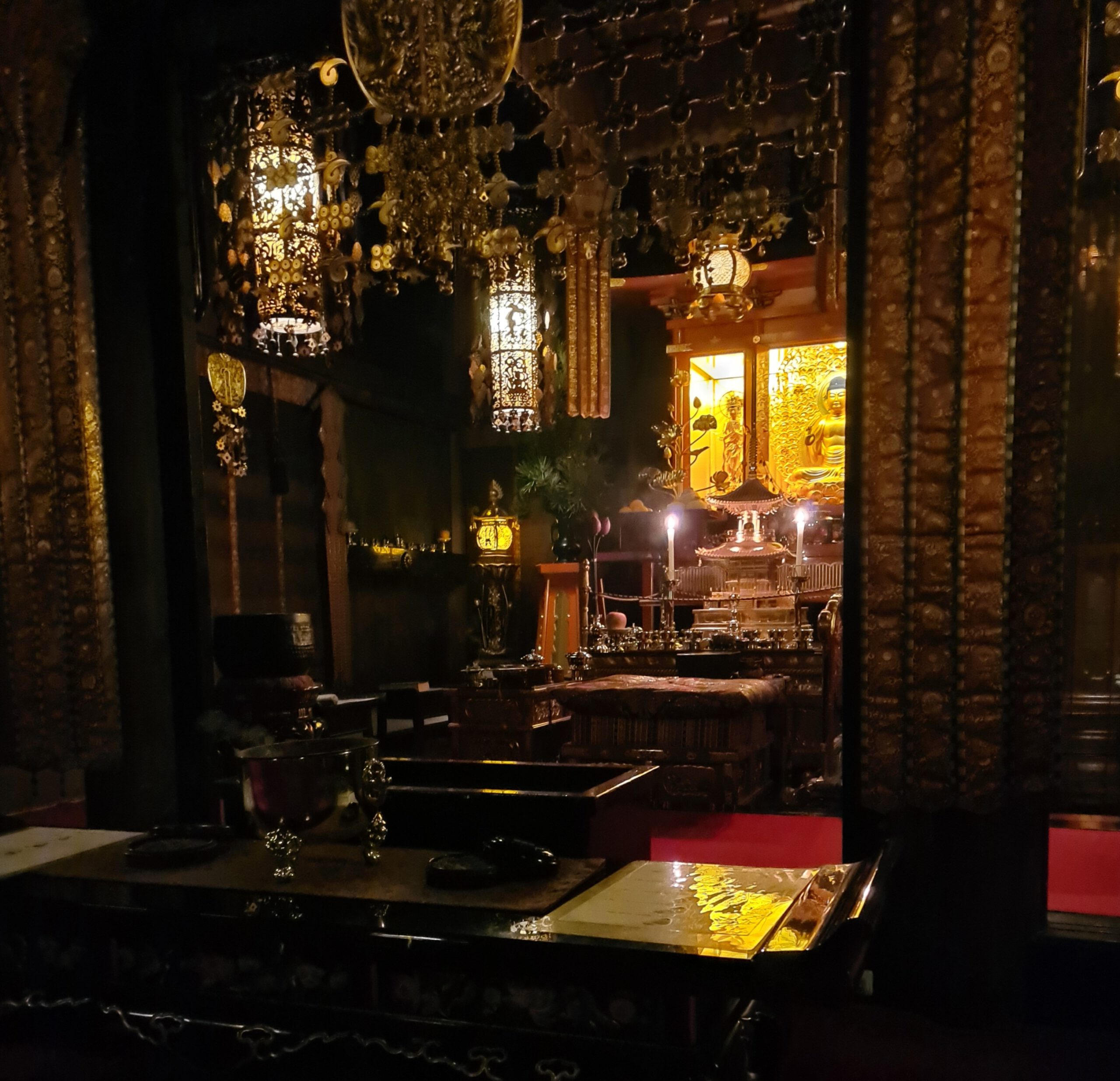
The next morning started early, with morning chanting in the main hall at 06:00. This time we sat on small chairs while the monks chanted and read for about an hour, reciting Buddhist sutras and prayers in a steady rhythm that filled the room. Even without understanding the words, the sound of the chanting, the pauses between readings, and the quiet concentration in the hall made it feel very solemn and peaceful.
Because we were there at the end of the year, the timing made it feel even more meaningful. Instead of marking that moment with noise and fireworks, we were sitting in a temple hall in the early morning, listening to a ritual that had probably been repeated in the same way for many years. It felt like a very calm and grounding way to begin the day.
At the end, everyone had the chance to go forward and take part in a short incense ritual in front of the altar. We bowed on our knees, took a small amount of powdered incense, lifted it to our forehead, and then placed it into a bowl, repeating the movement three times before a final bow. The gesture felt like a quiet act of prayer and respect, and although it was unfamiliar to us, it was also one of the most memorable moments of our time in Koyasan.
Breakfast and checkout
Breakfast was served immediately afterwards in the main hall on trays, with rice and tea on the side. It was savory, just like dinner and a little less varied, but it still felt very much part of the same quiet routine of the temple.
After breakfast, we packed up and put our bags outside on the patio because checkout was at 09:00. Then we went back out to explore a little more of Koyasan before returning later to collect our backpacks and head back to Osaka.